
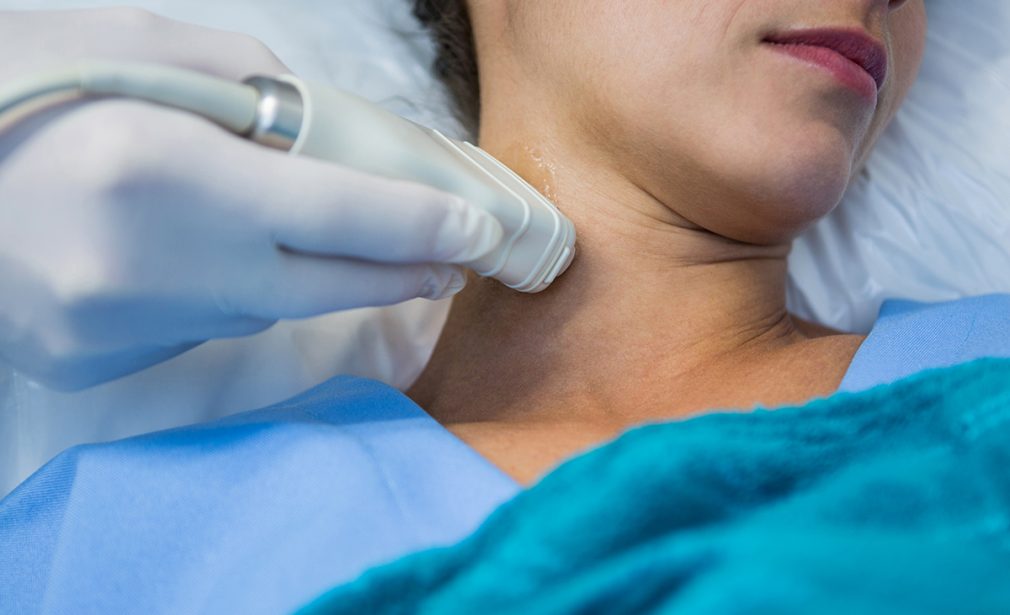
Thyroid gland surgeries
The thyroid gland is one of the most important endocrine glands in the body, and its role is essential in controlling many vital processes.
Location and shape:
- Located at the front of the neck, directly in front of the trachea.
- Its weight is usually between 20–30 grams in adults.
- Shaped like a butterfly, consisting of a right lobe and a left lobe connected by an isthmus.
Functions of the thyroid gland:
The thyroid produces essential hormones for the body’s life, the most important are:
- Thyroxine (T4)
- Triiodothyronine (T3)
- Metabolic rate and energy burning
- Health of the heart, nervous system, and muscles
- Regulation of body temperature
- Growth and development, especially in children
- Growth and development, especially in children
Common diseases affecting it:
- Hypothyroidism → deficiency of thyroid hormones.
- Hyperthyroidism → excess production of thyroid hormones.
- Nodules or cysts.
- Goiter (enlargement).
- Benign or malignant tumors.
- Viral or bacterial thyroiditis.
- Pituitary gland disorders (low TSH secretion).
- Iodine deficiency in the diet.
- Autoimmune diseases such as Hashimoto’s (where the immune system attacks the thyroid).
- After surgical removal of the thyroid or destruction by radioactive iodine.
Causes of hyperthyroidism:
- Graves’ disease: an autoimmune disease that increases hormone secretion.
- Toxic nodules that produce excess hormones.
- Temporary thyroiditis after childbirth or infection.
- Temporary thyroiditis after childbirth or infection.
- Taking high doses of thyroid hormone or iodine supplements.
- Causes of goiter (thyroid enlargement):
- Iodine deficiency.
- Excess stimulation by TSH.
- Multiple thyroid nodules.
- Chronic inflammation.